Showing posts with label gulf. Show all posts
2/15/2011

Innovation and Encouragement in the UAE

Posted by Andrew |

Incubation City: Missing Piece of the UAE puzzle

Written by Simone Hermsone
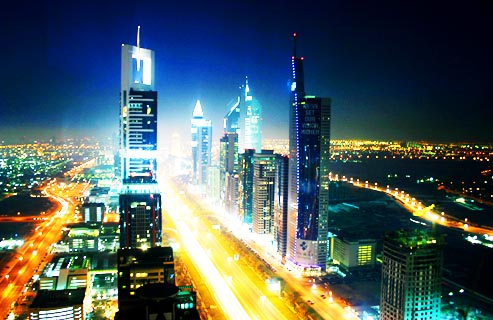
This is an article about the UAE where I live and work, but it could equally be about many of the cities across the Middle East. It concerns entrepreneurship, employment and how easy it is to start a business.

The sad truth is almost universally the answer is it’s not very easy at all.

With a demographic time bomb – a mass of people under the age of 16 working their way towards employment age – governments across the region need to be making their economies as dynamic as possible. Even in the oil rich Gulf pretty soon the public sector is not going to be big enough to mop up the school leavers. In countries like Egypt and Saudi Arabia it’s far more of an urgent issue: youth unemployment is becoming a cause for social unrest.

SMEs in most developed economies account for over 90% of companies and 70% of employment, a figure not reflected in this region which relies on its larger, more protected businesses and quasi government institutions to solve the unemployment issue. In the UAE, one of the most developed economies in the region, SMEs hover around 75% of companies and an even lower percentage of employment.

Over the years the emirates that make up the UAE have started a host of cities acting as hubs for the media, technology, production industries, etc. What any one of them has failed to do is start something as simple as “Incubation City”, a facility for the idea rich, and cash poor to move in to start up and grow their businesses, surrounded by a supporting infrastructure and like minded individuals.

The supporting infrastructure would be as simple as free or low cost space and support for company registrations, visas, etc – all designed to give an early boost to companies that could become big employers in the future.

Sponsors of the city could be brought in that would pay not only to attach their name to such a forward thinking place, but who would have a vested interest to mentor companies. Banks could provide seminars on cash flows and balance sheets in the hope of being bankers of choice for those that make it, VCs could offer management consultancy, in return for being able to get early insight into which companies are likely to earn the biggest investment returns.

Incubation City would not need to be altruistic itself. It could offer low cost loans to companies that work in the way student loans do in the United Kingdom, with payback not beginning until certain revenue targets were hit. It could also act as an Angel – taking a small percentage of businesses using its services that it could later sell on to VCs more interested in investing at a later stage.

For real estate, why not just un-mothball one of the excess commercial towers that has been built?

Interestingly there is greater support for Arabic and GCC citizens within the UAE, and even more for Emiratis. Media hub TwoFour54 an an example will provide funding for small companies run by Arabs – but not for Asians or Europeans. (Even here TwoFour54 tends to go into second stage not seed financing).

I can’t help but feel that kind of nationalism does no one any favours, however. Who cares where someone comes from if they build something locally relevant, that provides something useful and employs people? If great ideas come from Harry Kumar from Bangalore, but who has chosen the UAE as the place to build his dream, isn’t that great for the country?

If Kumar PLC became the next dot com giant, wouldn’t that reflect well on the United Arab Emirates – and do wonders for its local economy?

So far the UAE has paid a lot of lip service to the SME sector. With the global financial crisis it has spent more time working out how to get more from the infrastructure it is building, but as yet done little practically to catalyse the sector.

That’s a shame. There are a huge number of very bright people in the UAE, a country which has been very successful at bringing in talent from around the world.

The UAE, and again the region as a whole, has all the right ingredients to begin building a knowledge based economy. It just needs to spend a little less time trying to attract the shiny global brands, and a little more time nurturing the resources – the people – it already has at its disposal.

2/14/2011

Musings of an Expat (Other than myself)

Posted by Andrew |

CC Cities: Out of Synch with their People?
Written by Steve Royston

This morning I awoke to a glorious Bahrain dawn. Whatever people say about the poor air quality here, when the wind drops, it looks pretty clear across my balcony. The nearby buildings still in the shade contrast with the pastel hues of buildings further afield as the sun lights them up. True, it’s not exactly an urban idyll outside my front window. In the foreground there are twisted TV aerials sprouting from the rooftops of nearby villas. Cables running wild across the walls, and rusting satellite dishes. Further back, the light browns, greens and pinks of the buildings compete with an ugly red and white microwave tower, and the jagged grey stumps of half-completed buildings.

If you look out to the right of my apartment block, you will see an older building that seems to be dying on its feet. Fading paint, crumbling masonry, balconies full of junk, washing out to dry, broken pushchairs and white goods ejected from the living spaces indoors. A friend who served as a UN peacekeeper during the Lebanese civil war gets flashbacks when he sees it. He instinctively looks for snipers.

This afternoon I was supposed to be facilitating a workshop. It was cancelled last night because the meeting of country heads for an international firm had overrun, so they didn’t have the time. They had only called for it three days ago, so I wasn’t entirely surprised.

As I review things to follow up, I note that one company had promised action within a week. That was three weeks ago. Still nothing. A government department had promised a decision on a tender by the end of the week. That was two weeks ago. Still nothing. This was the third broken promise on their part. Now the bid bond has expired and I want the money back.

Nothing out of the unusual, really. Looking out from my balcony, you could be in any city in the Arabian Peninsula – Riyadh, Doha or Abu Dhabi. Maybe not Sana’a. More brick and babble there. But in any of those cities, your email inbox would be equally notable for what’s not waiting for you as for what is.

As a Westerner living in the Middle East, you get used to compromise. You encounter the tension between old and new every day. You admire the shiny new buildings, yet you’re not surprised that they’ve been designed without the safety features you’d expect elsewhere. You encounter old people wielding smart phones, and young people whose lifestyles and attitudes you think you can predict because they’re wearing Armani – but can’t. You see closed minds among the young, yet wisdom and openness from the old. Youngsters desperate to learn, older generations stuck in their bureaucratic silos. Cruelty, bigotry, kindness and humanity. All part of the human experience.

As the guest worker, I sometimes ask myself for whom these cities are built. For the minority of inhabitants who were actually born in them? Or for the millions who come here to help build, sustain and grow the edifices in an increasing spiral of development? The answer is obviously both. But I wonder if the ancestors of the indigenous populations – if they looked out over the tower blocks, tenements and clogged up streets – wouldn’t say that their sons and daughters had signed a pact with the devil.

The days of short lives, disease, scarce resources and subsistence living have given way to a legacy of plenty – greed, envy, fear, incredible wealth and desperate poverty. Old ways struggling with new. Heritage villages and museums recalling yet not capturing lives long gone.

What does it mean to be a citizen of one of these countries? To be joyful because they are part of a global village of shared technology, instant communications and slowly coalescing cultures? Or angry because in every street they hear voices they can’t understand, or see behaviour that they have no desire to tolerate?

And what will it mean to be a citizen in the future? Will the legions of immigrant workers slowly acquire the rights of earlier immigrants and share the citizenship enjoyed by the descendants of south Asians, Africans, Persians and Turks who settled in the region as merchants, pilgrims and conquerors? Or will these countries cling to their cultural and religious identities, and shut the door to those whose services they need but whose presence they resent?

It seems ironic that the Prime Minister of Great Britain, David Cameron, tells his compatriots that the age of multiculturalism is dead – that it is no longer acceptable for British citizens to live in cultural enclaves. Yet his government and many others expect the Arab world to respect and tolerate the cultural bubbles in their own countries – oases of little Americas, British clubs and Indian schools.

So are we moving towards a Middle East where there will be churches in Saudi Arabia, where the majority of the population of Dubai is Hindu, where English eclipses Arabic as the dominant language, and where falafel and tabouleh yield to the mighty burger as the dish of preference?

And is the real meaning of the Days of Rage, Anger and Departure that Arabs want freedoms available elsewhere, and to enjoy being part of the pluralistic global village? Or is it that they want to be proud to be Arab, for their culture to be seen as equal to all others, and live free of the condescension and economic colonialism that they feel have beset their homelands since the discovery of oil?

Perhaps both, depending on who you speak to. The desire for an end to poverty and for freedom of speech would seem to be common denominators. But how things pan out from here may be beyond the control of the most profound thinkers and determined actors in the region. There’s much at stake, and the tension between the old and the new will continue to eat at the Arab soul in the months and years to come.

Subscribe